
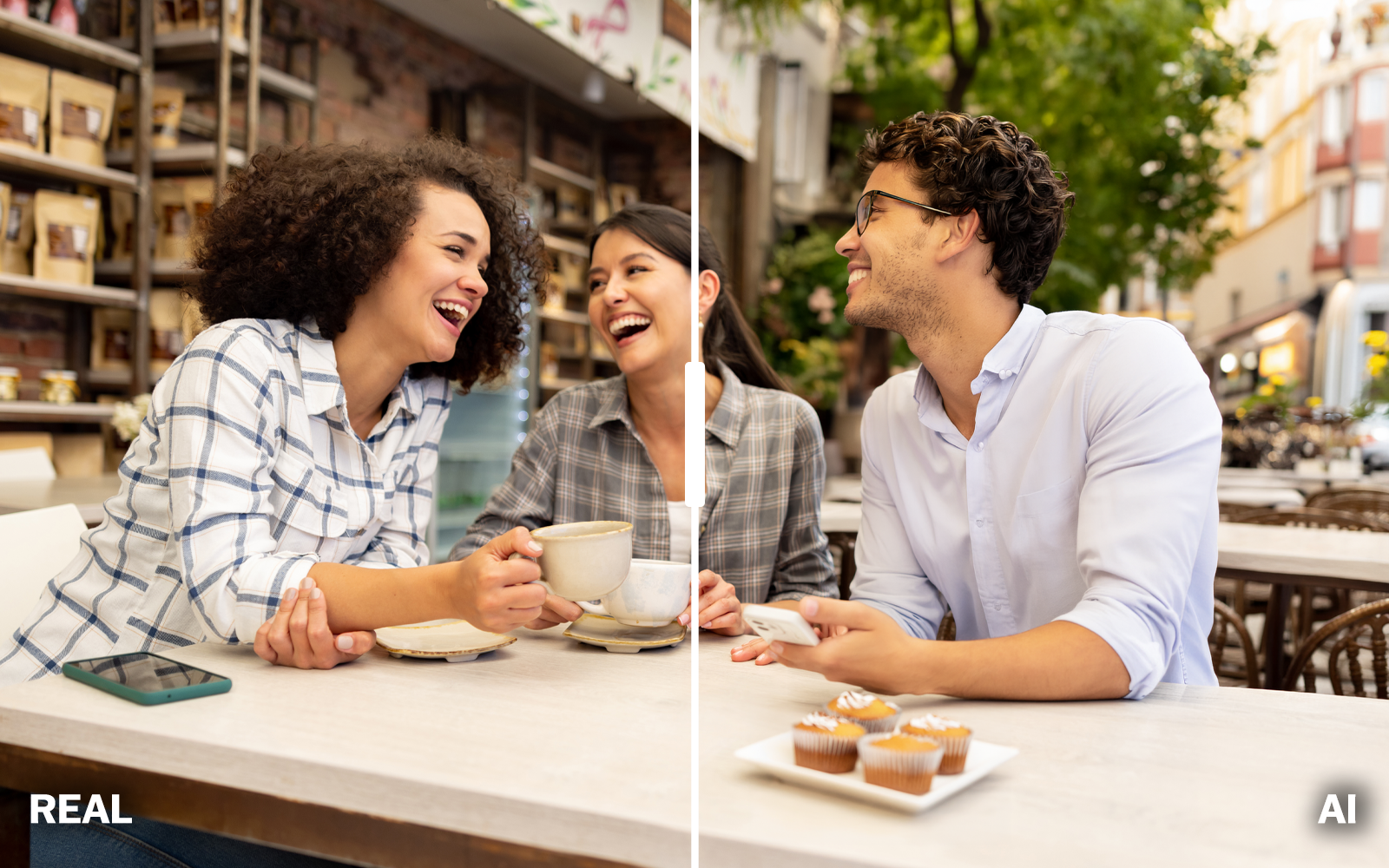
How to Spot AI-Generated Images (and Why It Matters for Your Brand)

AI isn’t just making your next family photo or LinkedIn headshot—it’s changing the rules of creativity, design, and even how we define authenticity. What does this mean for you, your brand, and the stories you share?
When computers first entered the workplace, the promise was simple: technology would make work more efficient so people could spend more time living their lives. The goal was never just productivity—it was balance. Somewhere along the way, that vision shifted. Efficiency became a way to do more with less, cut costs, and replace people rather than empower them. Now, as AI spreads into every industry, it’s time to ask: Are we using this tool for good, or are we losing something essential along the way?
At Zizzo Group (ZG), we’re trusted to bring our clients’ ideas to life—through stunning campaigns, meaningful stories, and visual masterpieces. Every project is a careful balance of timing, talent, and budget, leading to three questions.
1. Do we need a live photoshoot, or can we source images?
2. What’s the deadline?
3. How will we deliver top quality within the budget?
When AI Improves and When It Oversteps
AI has a role. It can come up with new ideas in a matter of seconds, add backgrounds and tweak images, streamline photo or video edits, boost efficiency, and open additional creative options. But when it comes to replacing the soul of a project—whether that’s a model’s genuine smile, the imperfect texture of real skin, or the story behind the image—AI misses the mark.
Imagine this: You come across a podcast by your favorite author. You’re hooked, listening to episode after episode, until something feels… off. The pacing is too fast; the words sound too perfect. You look closer and realize the podcast isn’t genuine — it’s AI, mimicking the author’s voice and stitching together content like a quilt. You feel fooled. Worse, you feel betrayed.
The same applies to images. AI-generated faces may appear perfect at first glance, but perfection isn’t human. It’s the imperfections—the asymmetry of a smile, the texture of skin, the emotion in a face—that connect us. AI finds it hard to replicate that connection, and when it misses, trust breaks down.
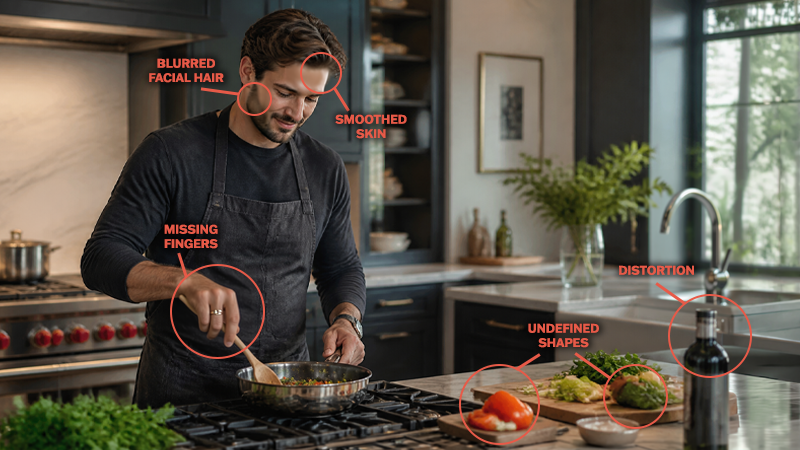
How to Spot an AI-Generated Image
To the untrained eye, AI images might look convincing. But here’s what to watch for:
1. Perfect symmetry – Human faces are beautifully imperfect. AI-generated faces often appear eerily symmetrical, which is an obvious giveaway.
2. Plastic-like skin – Real skin has texture, pores, and flaws. AI struggles to replicate this, often resulting in a smooth, doll-like appearance.
3. Funky fingers – Extra digits, missing fingers, or awkward hand positioning are common mistakes made by AI.
4. Misaligned expressions – AI has difficulty matching facial expressions to emotions, making images appear lifeless.
5. Reverse image searches—tools like TinEye or Quillbot—can help determine if an image is authentic or artificially created.
Why It Matters
When marketers let AI replace authenticity, the risks are more than just bad optics. The risks include stealing from artists, eroding trust, and losing the humanity that makes storytelling powerful. Imagine your brand’s imagery being used without credit, or your audience questioning whether your campaign is real.
At ZG, we believe in using AI as a tool—not a replacement. We leverage it to boost creativity, not eliminate it. Because at the end of the day, people connect with people, not perfection.